Tuesday, July 24, 2018

Future Series: The Increase of Suicide Rates during Climate Crisis Underlines the Need for Social Work Action


Climate change consequences hit our nation full force this year. Inhospitable heat waves and flash flooding display the foreboding of climate intolerance to humans as weather changes increase in intensity. Temperatures extremes are costly to life, health, and the economy. This week, an article from the journal Nature Climate Change, reported a link between climate change and mental health, specifically, a direct increase in suicide rates. Researchers (Burke et al. 2018) reported:

 “Suicide rates rise 0.7% in US counties and 2.1% in Mexican municipalities for a 1 °C increase in monthly average temperature. This effect is similar in hotter versus cooler regions and has not diminished over time, indicating limited historical adaptation… > 600 million social media updates further suggests that mental well-being deteriorates during warmer periods.” (para 1)

An increase in suicide is only one substantial area influenced by increasing temperatures. Climate events prompt a broad spectrum of harmful behaviors from individuals. As social workers, our response to climate induced behaviors needs a systems overview, plan, and response to intervene, and in some cases prevent, negative consequences.(More information about  the social work's response to environmental change and how you can be involved is available from this link
American Academy of Social Work and Social Welfare Strengthening the Social Response to the Human Impacts of Environmental Change)

The impact of climate change is a problem for every intersection of diversity. Crisis interventionists can work easiest with those who have the most resources economically, personally, and regionally. Climate change consequences pose the most threat to marginalized and vulnerable populations. Social work can bridge the gap between long and short-term solutions between these populations. Collaborations across disciplines to identify and develop strategies for communities to decrease anxiety, depression, stress on relationships, health issues, violence, and aggressive behaviors need to be developed. 


Considering the significant increases in temperature averages and weather extremes in the United States the response from social workers needs to be immediate and significant. People experiencing weather crisis require a coordination of resources. Heat waves, droughts, cold bomb cyclones, flooding, hurricanes, or when weather extremes increase past our ability to access resources, will challenge our national reserves to not only keep people safe from harm, but allow time for rebuilding or relocation. The effort to build support systems for climate change impact will involve all systems in order to be successful. Social workers can lead the shift in support systems through advocacy and education.

At the extreme, social workers will develop relocation plans for whole areas impacted negatively by continued hostile temperatures and weather. How will California residents respond to an increase of wild fire severity or drought conditions in agricultural areas? What if disrupting weather systems hit Puerto Rico each year making it significantly challenging to live there? Would the population of Puerto Rico become a third world where people have little access to electricity, food, or housing? Or will Puerto Rican’s be invited into our communities in America to continue their lives and culture without fear of losing their homes each year? How will Southern Florida residents respond to storms increasing in severity and damage along their coasts? What will happen to cities and businesses continually disenfranchised by flash flooding throughout the year similar to what is happening in Ellicott City, MD? These examples underly the need for future planning in the present, not as a band aid strategy as each crisis occurs.

At the least, social workers involve themselves with individuals impacted by climate extremes. Residents in warmer climates are now experiencing highs above 104 for the first time. Body temperatures reaching 104 degrees or higher develop heat stroke leading to organ damage or death. When the heat reaches 120 degrees Fahrenheit in California how do those without a way to cool their internal temperatures survive? What education and resources can seniors and children access to minimize the impact of new and existing heat waves? These questions require answers.

Social work educators and leaders are poised to assist legislators in designing appropriate mechanisms and funding streams for crisis intervention and support system infrastructure. Government planning will include micro and macro responses to climate change. Areas across the spectrum requiring intervention include; significant loss of life and illness, destruction of homes and businesses, the impact of economic costs in transportation, agriculture, production, energy and infrastructure, and the resources needed to address each crisis.
The chart below identifies key social work positions needed to stabilize our communities during times of climate change disasters and emergencies. This is not an inclusive chart. Each position is not intended to be the only resource. A multidisciplinary team of specialists supplement the strategies, resources, and labor force of climate change need. 


Climate Change Social Work Specific Position Needing to be Created

Position
Responsibilities
Collaboration
Housed
Community Relocation Transition Coordinator
·  Identification of welcoming communities for relocating individuals and families
·  Development of identified Welcoming Community to educate and prevent NIMBY
·  Develop strategies for moving small and large populations
·  Systems coordination between moving points
Government programs, Community stakeholders, Neighborhoods,
Businesses, School systems, Health Care, Police and Fire, Military, National Guard

Local, State, Federal government, Insurance Companies,
Climate Relocation Specialists
·  Assessment of family needs for location
·  Financial and Career planning
·  Crisis Intervention
·  Community advocate and liaison for integration between old and new residents
Housing, Businesses, Communities, school systems, real estate companies, local governments, social service agencies

Local, State, Federal government, Insurance Companies
Weather Extreme Coordinators
·  Identification of weather impact potential
·  Storm Consequence Mapping of Human needs
·  Coordinate community response efforts
·  Educational coordination of suicide prevention/evaluation resource materials to therapists and community
·  Develop and communicate area safe zones

Weather Services, local, state and federal governments,
National Guard
FEMA, health care settings, supply companies, businesses, Police and Fire, Military, National Guard
Weather Centers, local Governments, Regional governments, Military bases, National Guard posts
Weather Extreme Case Managers
·  Crisis Intervention
·  Suicidal ideation evaluator due to weather temperature increases
·   Resource management
·  Health care management
·  Shelter stability


Hospitals, Pharmacies, Temporary housing,
Social service agencies, Psychiatric facilities, Jails
Townships, Hospitals, Police or Fire Departments, Social Service agencies with emergency services
Weather Extreme Financial Managers
·  Crisis Intervention
·  Financial collaboration and translator for aid from Internet fundraising, insurance reimbursement, government aid
·  Works closely with Weather Extreme case managers


Federal Government agencies, Local government, Insurance Companies, Internet Fundraising groups
Insurance Companies, Internet Fundraising sites, Federal Government Aid, Townships, Social Service agencies with emergency services
Weather Extreme City Specialists
·  Community educator on self-care, relationship care, and health challenges during weather extremes
·  Coordinator of community actions to reduce crime and violence
·  Coordinate hotline and/or drop in centers for mental health issues related to extreme weather issues.
·  Collaborator with law enforcement officers and systems for methods in decreasing violence


Federal Government agencies, Local and city government,
Social Service Agencies, Police and Fire, Jail and Prisons, Hospitals, National Guard
Local Government, City Agencies, Townships, Social Service Agencies, Law enforcement Agencies

Social work education can provide a pathway for training future advocates challenged by the impact of climate change on a micro and macro level. Answers will come from the collaboration of all disciplines. Please share your thoughts and solutions about addressing the impact of climate change either through education, research or practice. Please participate in @CSocialWorkEd 's #twitterchat on August 1, at 12pm EST or August 2, 1pm EST for a chat on #SWFutures. You can submit questions to CSWE.org by 7/27.

Reference
Burke, M., Gonzalez, F., Baylis P., Heft-Neal, S., Baysan, C., Basu, S., & Hsiang, S. (2018). Higher temperatures increase suicide rates in the United States and Mexico. Nature Climate Change. Retrieved from https://doi.org/10.1038/s41558-018-0


Friday, April 13, 2018

The Future of Social Work Series: Part I –Reacting to change or innovating the change?


Ray Kurzweil, Bill Gates, and Oren Etzioni, each a person who can be viewed as an innovator, futurist, or someone with strategic foresight. The future is an unknown, but the prediction of innovation is an underpinning of many strategic plans. Social work is not different. Professional social work organizations are strategizing about the future of social work. The American Academy of Social Work and Social Welfare released the Grand Challenges for Social Work to support innovative changes needed as social welfare is impacted by science and technology. Providing a road map for the Grand Challenges, The Council of Social Work Education recently released their task force report Envisioning the Future of Social Work about where the profession of social work may be headed in the years to come as we address the issues presented in the Grand Challenges. The future is here, but what does this mean?

Five years ago, I developed a table comparing Social Work's Past, Present, and Future with technology. Some of those predictions have manifested while others stagnated. The table exhibits how far we have come in social work, but underscores the necessity for social workers to accelerate their ability to create and assimilate changes technology brings to our profession.  The social work profession is in the process of a course correction. This post is the beginning of an innovation series to look at the changing shape of social work education and practice for the future. These ideas are meant as a complement, continuation, and discussion about the forecasting occurring across the profession of social work.

Image result for what is social innovation

I am challenging each and every one of you to think past today, next week or next year. Become active in evolving the social work profession from one of reacting to crisis, to a profession of worth within the fabric of our societal values.  Social workers need to become active and loud in their advocacy. We are the translators of human evolution on this planet and we are not doing too well at it. The social work profession is kept at the lowest rung of Maslow’s Hierarchy of Needs. The marginalization of resources for vulnerable and marginalized populations coupled with a stigma of NIMBY or the cultural rejection of 'other' set the stage for surviving, not thriving. How can we set self-esteem needs and self-actualization goals for our client populations if our profession cannot move past scarcity issues in a reactionary framework? Perceptions of social work needs to change as much as the stigma towards our client populations.

Societal crisis is underlying the need for innovation in social work. Crisis is now being felt by populations across demographic boundaries. Climate changes, the rapid pace of technology innovation, and outdated social justice system processes lacking evidence based success are some areas which will take the center stage of needed action. Disparities with marginalized populations will continue to reach crisis levels in our country and the world. Our profession will be called upon to develop interdisciplinary solutions through collaborative efforts on a scale not previously experienced. Even within the profession, micro level social workers will be asked to expand their knowledge of macro systems and advocacy. The application of systems theory will be stretched, further encompassing global interventions as a norm instead of a separate focus.

Technology changes the way we connect personally and professionally. Disruptive technologies alter the way we work, participate in relationships, and play. Social workers will integrate the full meaning of “change agent” like never before. Adjustment and resiliency will be adopted as a necessity to address the coming shifts. The emphasis in new social work will be on adaptation, cross discipline collaboration, and transformation. The challenge of the next few decades will either support equitable solutions or increase the divide within and between systems.

We need innovation drivers informed through a combination of macro and micro practices. Collaboration between innovators and opinion leaders is essential to reach critical mass for change in each future area of projected demand. Using the Diffusion of Innovation theory, where do you fit in when applying innovative approaches in the field of social work education or practice?

Image result for change agents diffusion innovation

Innovation includes transforming classifications of prevention, revenue, power structures, cross-disciplinary collaboration, and outdated systems of addressing crisis. Review the areas below. The test for our profession will manifest through these areas of crisis:

·         Climate Change
·         Criminal Justice
·         Demographic Shifts
·         Ethical Dilemma Evolution
·         Immigration from Global Crisis
·         Impact of ACEs (Adverse Childhood Experiences)
·         Inequity and Discrimination
·         Lifespan Extension
·         Technology Advancement Adjustment

Using information from sources across disciplines this series will look to potential social work career challenges, expand existing or future occupation paths, and explore cross-disciplinary support for each.This post serves as an outline for future posts. Starting with social work education as the vehicle to get us on the path to the future, I will then explore career paths. By breaking down each crisis arena, posts will elaborate on job titles, position descriptions, multi-disciplinary collaboration potential, and where these positions could be housed. Finally, the last section, pushes us out past ten to twenty years to where current technologies may be leading societal needs.

I hope you will join me on this trip to the potential future of social work. I welcome your feedback, additions and insights into these discussions.


Monday, March 12, 2018

Technology and the Trump Presidency will make Americans Great Again


     Each day since the presidential election in 2016 I have mourned. Since the inauguration, everyday I feel like I am a stranger in a strange land. I learned early on to stop saying 'it can't get any worse.' (Hang in there, this post gets better.) Every human right I have worked towards advancing in my 30 years of practice seemed to be crumbling. My furious social worker self calls, writes, tweets, gives money, protests, develops action plans, and supports individuals experiencing the many injustices occurring. This advocacy behavior is not new to me, but the frequency has increased tenfold. I experienced a despondency and burn out my optimism of the past would not allow. I felt hopeless.

     Then something changed. As I reflect back, this momentum started with the #blacklivesmatter movement and then continued with the #metoo revelations which in turn hit critical mass from the last school shooting in #Parkland. I began to see America through a strengths based perspective again, and I do mean strength.

The Start

   Even before the Trump Presidency, the #Blacklivesmatter movement began to shift how advocacy became a nationwide phenomena of awareness and support. Technology began to be used to address inequity and racism. The social media storm after the Trayvon Martin murder elevated awareness of injustice through a hashtag. Instead of the injustice only being addressed by the community where it happened, social media's vast reach elevated The Black Lives Matter movement. I believe this movement gave an unconscious permission for people of color to then bravely start documenting the injustice of abuse towards the Black community and share their perspective with the world, not just their community.  
                           Image result for black lives matter     
     As institutional racism promotes the keeping of secrets in misconduct by power structures, social media allowed a breakthrough of voiced experience to occur. Hearing about a racist act is significantly different then SEEING it. Smart phones and surveillance video became a tool to tape the violent misdeeds of those abusing power. The instances of abuse towards minorities by people in power is not new. The potential of a smart phone, capable of instant recordings and real time video exposure, broke open these offences towards people of color. White people, comfortable in their privileged denial of criminal justice inequity, could not deny what their eyes saw. A new layer of awareness spread across America for some of those privileged open to the truth, but more intersections of diversity needed awakening. 

Then Came Trump...An Advocacy Culture Gains Momentum 

     As the election results became finalized, Women across the country knew we were in trouble. Evident from the positions taken by Donald Trump on legislation and policies attacking the rights of women, immigrants, LGBTQ, and ACA recipients, coupled with attacks on reproductive rights, climate change, racial equality, and freedom of religion, a movement engaging more complacent Americans than ever was born. I did not feel alone in my struggle with the change of power any longer.
    The following personal example started my kernel of hope for change. I do love a good protest, most social justice warriors do. Starting in college I participated in protesting for many causes impacting vulnerable and marginalized populations. Friends and family would roll their eyes with my accounts of  demonstration tactics to affect change. Fast forward to today. My mother, MY 74 year old MOTHER, attended the Women's March in Chicago. She even regularly participates in the Facebook group Pantsuit Nation and watches Rachel Maddow. Not only did she attend, but millions of women (and men) protested around the world for a woman's right to be equal. If my mother began action to change the state of America, there is hope for us all. 

                                                         (my mother, Karen H. far left)
And then came #metoo

     The #metoo movement offered the chance for the invisible to become visible. A solidarity among women rose like never before. #metoo not only offered an opportunity for global healing, but an increase of awareness as never felt before by all citizens. As the #metoo hastag became a tsunami of posts from women of all colors, status, income and age, a profound awareness spread as each woman (and some men) bravely came forward to be silent no more. Harassment and assault became the face of a celebrity, neighbor, friend, or relative, not just a CSI-SVU episode. The next level of civic engagement enveloped an even larger segment of the population. 

    Women across the World are protesting for equal treatment and equal rights. Even with the importance of the #metoo hashtag, out of this awareness the after effect is what holds the most promise. Abusers are losing jobs and status. Companies feel pressure to hold an ethical line not previously addressed. Citizens demand consequences or they will garner their own efforts, through social media and their buying power, to hold accountability to large company deniers and abuse backers. Money is being raised and allocated to support the plight of women without means to herald their own power over harassment and abuse. Protests and social media campaigns are now becoming the start of a larger discourse changing societal norms.

 The hope continues...through Tragedy

     The cumulative effect of these efforts will reverberate across America for decades to come, yet these movements paved the way towards what we are seeing now with the #Parkland school shooting. If I became encouraged about my mother's demographic becoming involved in societal change, seeing Generation Z start a movement is awe inspiring. The "First they came for" adage applied before this shooting. People of privilege (insert name of privilege here) did not take action because it wasn't happening to them. Sure, some people felt bad or hopeless about mass shootings or gave money to help those personally impacted, but what did they 'do' about it? 

                                                  Image result for they came for me

    The youth impacted by the #Parklandshooting are not waiting to make a difference, they ARE making a difference. Parkland Florida is one of the wealthiest cities in Florida and yet even with all this wealth the deadliest high school shooting in America occurred. The reasons are complicated and important, but the main takeaway from this which offers hope is what happened after the shooting.  

     Our youngest generation is developing their political voice using social media and protest to promote their discontent with the systems inaction. Political pressure is being focused across society on a movement to protect youth. The #MarchforOurLives movement is encompassing not only mass shootings at schools, but the societal harm of lax gun laws in America impacting every intersection of population. Pressure is being placed upon policy makers and Corporations to not just donate towards a cause, but change their policies if they want to prosper. 

Days after the shooting, some students met with teens from Chicago to talk about gun violence. The Parkland teens message became even more inclusive during a crucial understanding of difference between their experiences. Instead of Parkland teens helping Chicago teens, Parkland teens opened up to a new awareness. “A critical moment came when one of the Parkland students apologized for the privilege they took for granted.” And this is the start of the larger narrative needed to bring communities together in America.

     Parkland students are using their considerable privilege and their technology literacy afforded to them from this privilege to give voice in attempting to eliminate the epidemic of privileged behavior supporting gun proliferation and it's cultural consequence in America. The blueprint for action these students built upon from other movements will gain momentum towards other morally bankrupt political structures harming Americans. Americans continue to be awoken. The sleeper awakens. 


The discourse across America has begun to make a difference. American's have the power to make America great again...in spite of our political system. This is the hope delivered from the Trump presidency. 


Thursday, January 11, 2018

Marijuana in a Digital Age: A Potentially Unconscious Impairment

As the US government reviews enforcement of marijuana laws, the rest of the country is legalizing use state by state. The legalization of marijuana in some form spans 30 of our states with at least 12 more potentially on the horizon for 2018. As social workers, we need to traverse this changing landscape to help our clients, but what about ourselves? Legalization presents ethical issues for personal use by social workers. What do social workers need to know about technology and marijuana.

This might seem like a non-issue for social work professionals, after all, substance impairment during social work practice is against our ethical standards. I address this issue because of the ease in which technology allows social workers to practice even when not at a physical place of work and the new addition of a mood altering drug which may fly under the radar of professionals unfamiliar with its effects. The legal opening in some states and healing effects touted by people using THC make an attractive package for those never privy to this illegal substance. Some people who never used illegal substances may be curious. Others live memories of substance use in bygone days of yesteryear. These are not the substances being sold today.

Availability of THC opens the door for medical, psychological, and recreational use by social workers. Legalization paves the way for smoking, tinctures, edibles, and concentrates to an entire new market. While alcohol stays in the blood for 12 hours, THC can be in the blood for up to 336 hours.The high from smoking marijuana only lasts a couple of hours depending upon the amount used.  Ingestible THC stays in the system for a longer period of time with a more intense effect. A high from ingesting THC can last hours with the peak up to four hours after consumption. Documentation of effects, depending on the chemical composition, can last up to 24 hours.


Texting, emails, and HIPAA compliant phone apps and therapy online, open communication with clients more than the standard nine to five work day.  The effects of THC and a reduction in the standard boundaries technology affords us could open the door for mistakes on social media, or worse with a client. Before use be aware of the potential effects of use. SAMHSA describes the short-term effects of marijuana use which include "problems with memory and learning, distorted perception, difficulty in thinking and problem-solving, and loss of coordination." Addressing crisis situations by text or phone may be diminished. Auto-correct is a bad enough problem with normal texting. If there is a loss of coordination what message could be sent which could inadvertently cause harm? If emails and texts are a part of the client record everything you send has a potential for review or subpoena.

Due to the illegality of THC on a federal level, workplace law makes it a terminating offense to test positive on a drug screen. If there is a workplace incident, many organizations use drug testing to protect themselves from liability. It doesn't matter if you used marijuana medically over the weekend or socially the night before. If the result for THC is positive there will be consequences. Social workers will need to utilize a cost benefit analysis if they choose to use THC. Is it worth the cost? Only each individual can answer this until THC is legalized federally. Check the rules at your organization to be fully educated on the consequences. 

Self check ideas when using medically or socially:
1. Educate yourself on the pharmacological differences of THC, CBD, and marijuana strains.
2. Educate yourself on the physical, psychological, and mental effects of marijuana.
3. Use your knowledge of research to study yourself on the drug. How much has what effect? What do you notice as changes to your cognition (but remember, this study is biased!)What are other changes you notice? Have someone (not using) test your mental, physical and psychological acuity every half hour and write down the results.
4. Remember, as with any substance, you may have an inflated sense of being competent while using, when you actually are not.   
5. Do you have a back up plan in case a client reaches out to you in an emergency? 

Valid reasons exist to use THC; stress reduction, anti-anxiety, pain reduction, or recreation. The is not a post about the issues with addiction or using marijuana. Research and anecdotal evidence support significant relief of certain medical and psychological conditions.  This information is to remind us about being educated and mindful when we use any mind altering substance. Eliminate interactions using technology both professionally and personally during this time. Do not engage with clients or social media. No client wants should receive a text meant for someone else nor do you want your claim to fame to be "the Twitter Donald Trump of social work". The Internet's long memory is not one you want to become a part of in a negative way. Setting up standards for yourself if you choose to partake in any substance reduces risk for yourself and the populations you serve.


Thursday, July 13, 2017

Why on Earth would I want an iWatch?

     More than a decade ago I left my wristwatch behind while I learned to access time on my cell phone. I never looked back. Not being bound to my watch offered a relief from a time bound schedule, or so I thought. As the abilities of the cell phone transitioned into a smart phone, time once again became an ever present reminder. Wearable tech became popular with step tracking to then exercise monitors. Looking at my Fitbit offered incentive and reward for walking plus a time keeper. Once again I had a watch. When smart watches appeared on the tech market it was the last device I thought I needed. My Fitbit functioned well, except when I washed it. After three waterlogged Fitbits' went by the wayside I decided a waterproof function would save me money. Enter the iWatch.


     I researched many options for waterproof, but since I swim laps this seemed the best and least expensive option for under $300 and even at this price it is expensive. I took the plunge not looking back since. Besides the swim feature, which I love, I can shower, wash dishes, and submerge my iWatch without consequence. Since I am forgetful, this feature alone proved a worthy purchase. The other features, which I am still exploring, decrease stress, improve my health and offer me options to improve my life I never thought I needed. This is a list of the features I adore (until I find new ones).

1. Find my iPhone - A little phone button on the swipe up screen offers a loud signal to find my phone when I set it down somewhere and I cannot remember where. This feature alone saves me hours (and being late) wandering the house trying to find my phone. While simple, the feature alleviates a lot of stress for the absentminded professor (me).

2. Heart rate monitor - Two words: Thyroid issues. The heart rate monitor identifies high and low rates, even when sleeping. When the heart rate averages start to climb or drop over time I know it is a signal for a thyroid check. Oh, and it is good for exercise.

3. Sleep monitor - I became hooked to monitoring my sleep with my Fitbit. The iWatch brought this to a new level. Being a researcher, I love graphs of all kinds. The sleep tracking option helped me come to terms with my insomnia and accept it as normal for me.

4. Standland - I sit, a lot. Between counseling, writing, and teaching online I am always at my desk. I even own a standing desk, which would work better if I remembered to use it. This app reminds me to stand at 50 minutes to the hour between whatever times I choose. An added benefit is the reward of  earning features within the game encouraging my agreement to stand.


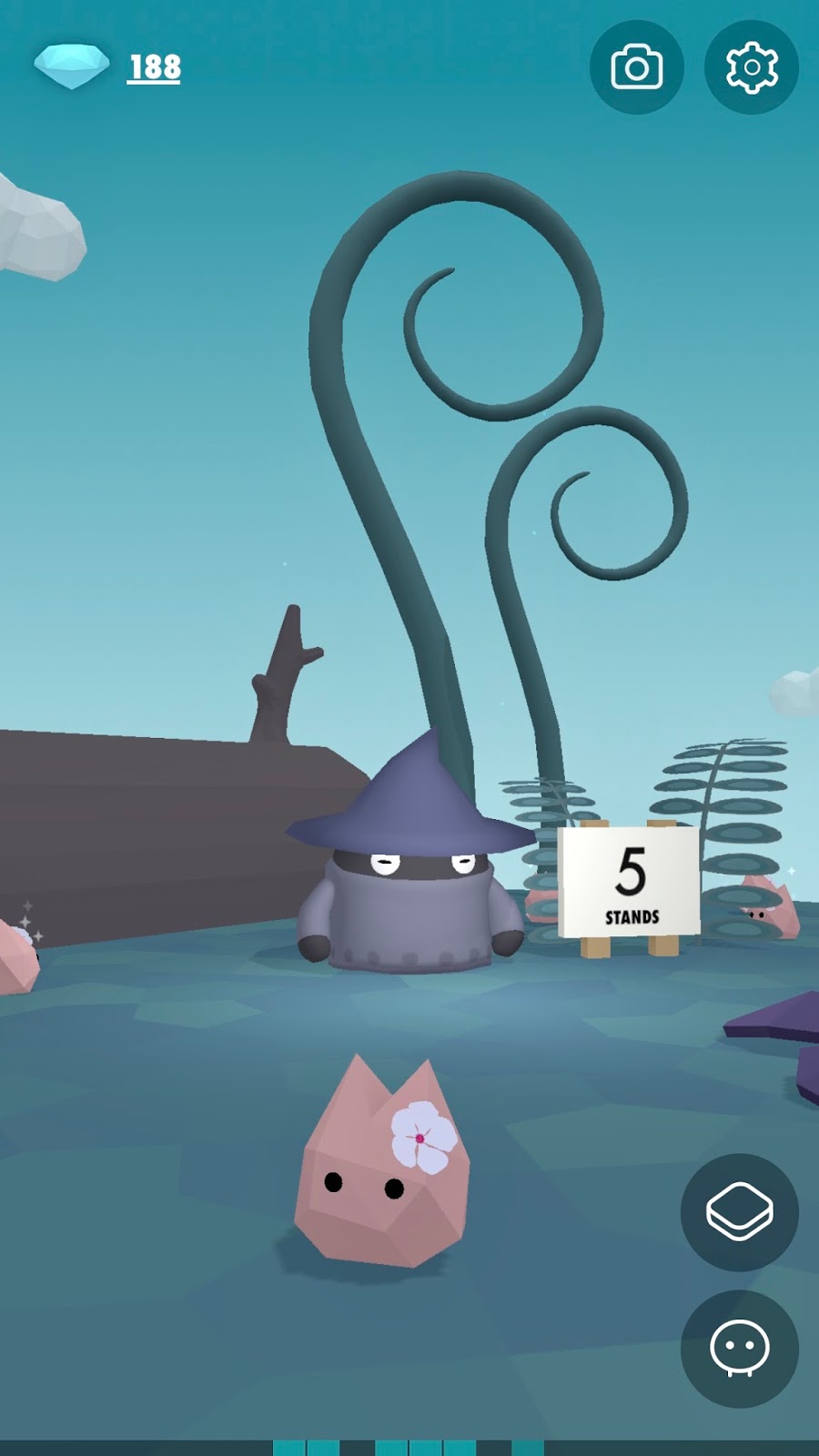
Standland App - iPhone

5. Maps - This unexpected feature provided me with a gleeful surprise. If I put the address I want into the phone, before each turn my watch's hepatic system (little vibrations on my wrist) alerts me I will be needing to turn. If you talk through your car phone system, listen to books/podcast or tend to be problem solving while driving this feature saves a lot of time with the recalculating GPS when you miss your turn. Needless to say, this app saves me enormous amounts of time.

6. Mindful and Calm Apps - These two apps provide hepatic reminders to be in the present and breathe. These tools enhance my mindfulness practices and lower my stress levels. 

     These apps represent only a few ways the iWatch enhances my life. For me the purchase creates new habits and reinforces positive behaviors. If you have one, how does it help you?


Your Protest Safety Toolkit: What to Carry, Watch For, and Avoid When Protesting

  We are in unprecedented times for protesting. April 5 th has the potential to be the largest protest in America. In my 40-plus years of a...